Wednesday, 27 February 2013

Level Design Changes - 2/27/2013


Play testing the level during the blocking outstage posed to me a problem. As the level is exploration driven, the player must not get bored whilst exploring. As I wandered about, I found that the level was rather large for a 5 min playable.

Top view of the level so far, at this point.

When it comes down to the player perspective, the distance is rather large.


I timed the time it took to walk -straight- from one side to the other and it came out as 33 seconds. That's a 10th of the time the level needs to play. I thought that this time would be way too long as the player would not only get bored of walking, but doesn't fit into the brief for this section of play.

Now I am posed with 2 options: 1) to shrink the level down in scale or 2) cut out a massive chunk and revaluate the structure.
Re-evaluated design with a slightly more linear path of play.


Thursday, 14 February 2013

Level Design Documents


'Walk though' through screenshots and bulletpoints.

Level Overview - refer to theme

Playable Characters

Enemies

Key events - Split into scenes, 2/3/4 key events in a 5 min level.

Collectables

Directional Cameras, Cut scenes, Interactive CS, QT events.

Asset List < Uneeded for this level

Map Overview
   Top Down <Copy/paste Top down level, Show any changes.
   3D Map

Level Walkthrough
Break down into points into the scenes which has been defined in Key events.

Precice and concise. DO NOT EXTRAPOLATE.
Be clear and simple - this document should take a day.

GRAPH FOR TEMPO/PACING
Always describe from players perspective.

Step 8 - Focal Points

STEP 8 - Focal Points


Functional purpose- helps the player orientate themselves
Visual aesthetic function - makes environment pleasing
Draws the players attention - players want to explore the area.

Player always needs to understand where they are and where they're going.

Step 7 - Top Down Layout

STEP 7 - Top Down Layout


Original Design: (was internal instead of external)


Second Design (revision): Made it external.


Third Design (Revision): Scaled back from 3 puzzles to 2 - allows for better made gameplay.


Buildings
Landscape
Map boundaries
Player paths
Alt routs
Space relationships
Flow
Pacing
Important locations
Focal points

Step 6 - Objective and Obstacles


STEP 6 - Objective and Obstacles

Goals of what the player needs to complete.
Flow ideas of what player may face.

Objectives:

What does the player need to do within the environment in order to progress?


The player will need to collect a couple of 'orbs' and transport them to their places in order to activate the focal point.

The first puzzle is a jumping/navigation puzzle where the player needs to find the correct path over a set of hexagonal tiles. If the player jumps on the wrong one, the tile will collapse into water.

The second puzzle is a set of traps down a corridor the player will have to navigate in order to reach the middle.

If the player is pushed off the edge, the player can only return to the beginning to try again.

Once both the orbs have been placed, the player can return to the centre focal point.

At the focal point, two lights will be shining through masks in order to show the player the correct switch out of many.

There will be no threat apart from the enviromental traps which are in place at the two puzzles.


Obstacle mindmap tree can be used to plan how players approach objects.


Step 5 - Story

STEP 5 - Story
There are 2 types of story in a level:
1- Story of the environment (what happened prior to the player getting there)
2- Story of how the player got there? what are they doing there? What brought them there?

Write a history for the environment. How did it come to be? What is the player doing there? Why are they there?


Thursday, 7 February 2013

Step 4 - Photo Reference


Very important in order to gain understanding of the things you're building.
At least 2 annotated moodboards for:


Environment and location reference
Set design and props

1 annotated moodboard for:
Lighting and style
Inspirational Reference (artistic reference? Journey.)

Reference guides structure of things.

Step 3 - Location and Environment Setting


Where does it take place?
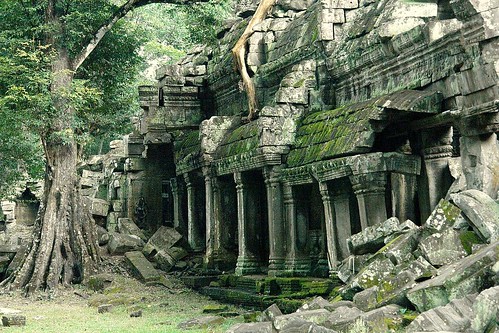
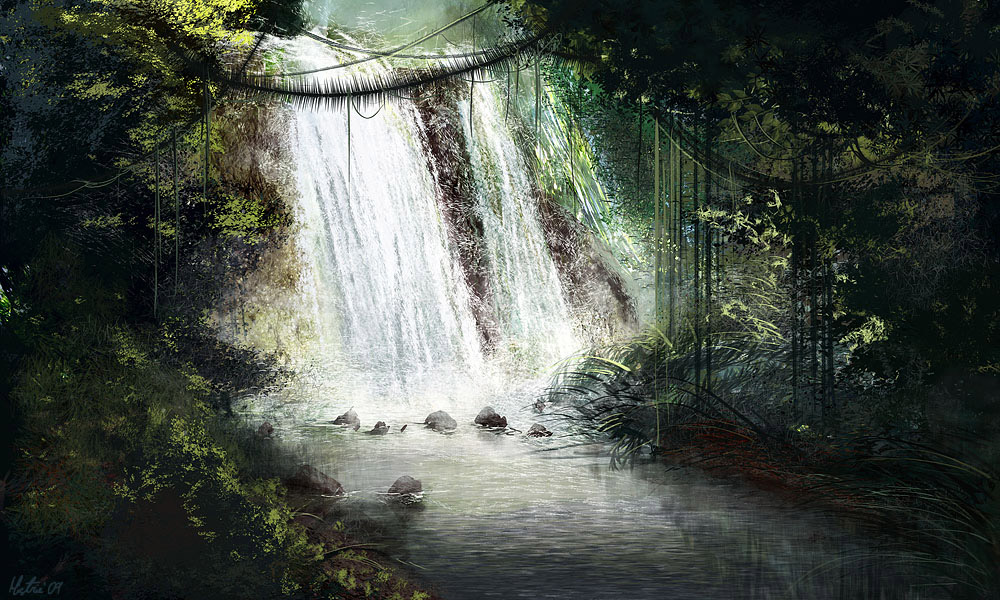
Outside with inside elements. In a forest/jungle area where the player has to unlock a door using light.

Ruined areas, enclosed sections for some puzzles.

Area is damp and is remenicient of a warmer climate.
Is it mid-day or evening? - Twilight. Just enough natural light to explore, but the highlighting of extra lights can be used.

Use of light in order to direct player.

'Combination' lock of light-masks to be switched on via switches found during exploration.
2/3 Triggers to unlock the centre entrance.

Puzzle and exploration based.