Gamasutra:
Examining game pace - How single-player levels tick
Other reference:
hourences.com
worldofleveldesign.com
(http://www.guardian.co.uk/technology/gamesblog/2012/nov/21/journey-emotional-game-design)
Importance of Pacing and Tempo
FUNDAMENTALS
- Movement impetus
- Threat
- Tension
- Tempo
STRUCTURES OF PACING
- Rhythm
- Melody
- Harmony
- Form
- Timbre
- Dynamics
- Texture
Funamentals -
Movement impetus
- The will of the player to move through the level.
Increasing impetus
1) Introduce threat from behind
2) Present an objective ahead
3) Impose a time limit
4) Narrow physical options
5) Draw the eye with focal points
6) Architectural Pressure
7) Snatch desired objects
8) NPCs lead the way
Impetus needs to ebb and flow in order for players to enjoy the game.
Decreasing impetus
1) Wow moments
2) Obstacles
3) Alter player's movement
4) Introducing a threat ahead or increased tension
5) Multiple routes/Open world
6) NPCs halt player or Dialog/RP
7) Taking stock - collecting items
8) Story Exposition
Too many of the decreasing impetus is dangerous and stops player from feeling progression
Threat
- The notion of danger
Environmental:
1) Large drops - S
2) Dangerous traps - S
3) Destructive landscape -L
Combat:
Can be used to speed up or slow
-Blockage will halt player
-Being persued will speed player up
Proximity:
Enemy at a distance will make player think of next move
A suprise attack will force player to act quickly.
Tension
- Atmosphere and mood of the level/percieved danger
Belief of unknown danger and atmosphere - difficult to achieve but worth it.
Player knows they are in danger but does not know what it is
This can be achiebed through hints and environment.
Atmosphere
Tension requires atmosphere to be well executed
Audio and Striking visual effects
Known
Fear of the known can create a huge amount of tension in stealth
Anticipation of being caught will increase tension.
Tempo
- Level of action being experienced by player.
Tempo is defined by people's concentration
high tempo is high-reaction, induces panic - frantic
Low tempo is thoughtful, calming.
Movement:
determined by mechanics
Explorative movement is low tempo as the player is thinking
Acrobatic environment traversal can be high tempo
Sense of flow = high tempo
Puzzles:
Naturally low in tempo
Only way to make a high tempo puzzle is to add a time limit.
Combat:
High tempo naturally as it requires a split second decision
Tempo can change dramatically.
General Skirmishes
Is a rise, then a slow curve downwards
Boss battles
Gradual build.
Thursday, 17 January 2013

Step 2 - Purpose
What is the purpose of this project idea?
To echo the awe of 'Journey' in some of their explorative moments. Explore simplicity - intuitive direction with gentle guidence. The exploration is facilitated by very simple mechanics and enforced by the collection of artifacts.


Why do I want to persue it to its completion?
I really want to create and craft an experience similar to Journey and learn from the best parts of the game.
Why do you want to create this environment and level design?
Recently inspired by the game, love of the geographical references and message.
http://www.guardian.co.uk/technology/gamesblog/2012/nov/21/journey-emotional-game-design
A set number of environment features and elements in the environment must be created in order to make the project stand out. Make them unique and different.
How am I going to make it standing out technically? Visually?
Simplicity and use of water/ blooming flowers?
What elements will you focus on to make your level design unique and stant out?
Fluidity, simplicity
What do you want the player to experience?A sense of an emotional journey, or being part of something emotional or representational of an emotional breaththrough. Perhaps the restoration of hope.
To echo the awe of 'Journey' in some of their explorative moments. Explore simplicity - intuitive direction with gentle guidence. The exploration is facilitated by very simple mechanics and enforced by the collection of artifacts.


Why do I want to persue it to its completion?
I really want to create and craft an experience similar to Journey and learn from the best parts of the game.
Why do you want to create this environment and level design?
Recently inspired by the game, love of the geographical references and message.
http://www.guardian.co.uk/technology/gamesblog/2012/nov/21/journey-emotional-game-design
A set number of environment features and elements in the environment must be created in order to make the project stand out. Make them unique and different.
How am I going to make it standing out technically? Visually?
Simplicity and use of water/ blooming flowers?
What elements will you focus on to make your level design unique and stant out?
Fluidity, simplicity
What do you want the player to experience?A sense of an emotional journey, or being part of something emotional or representational of an emotional breaththrough. Perhaps the restoration of hope.
Step 1 - Ideas
List of ideas to use:
- Sihlouettes
- Masked (hidden) areas
- Finding shards of the mask
- Completing/destroying a mask to shut out/let in sunlight.
- 'lense of truth' sort of mechanic.
Level Design - 8 Steps of Level Design Pre-pro
Process of Generating Ideas.
Reference material, understanding story, environment and objectives...
Resources:
'How to plan level designs and game environments' - 'World of level design'
hourences.com
gamasutra.com
udn.epicgames.com < technical help.
Level Design: Concept, Theory and practice - Rudolf Kremers
The Art of Game Design - Jesse Schell
((Concept art is broken down as something which is functional))
8 Blog Posts which focus on each area.
INTRO -
We need to consider our level carfully before we construct it.
Pre-production blueprint will lead us as designers to create the level.
- The iterative and procedural generation of the level idea.
- The Generation of gameplay possibilities for a spesific type of environment
- Architectural structuring for Game Play and Level Design
- The Aerial planning of your level design.
STEP 1 - Idea
Everything starts here!Has to be something wanted.
Ideas happen at anytime.
Carry a journal which is for rough workings.
Am I excited about the environment?
Am I inspired to create the idea and see it as an environment?
Ensure you can persue it and want to persue it completely!
Ideas - Sillhouettes
STEP 2 - Purpose & feature
What is the purpose of this project idea?Why do I want to persue it to its completion?
Why do you want to create this environment and level design?
What are your reasons? What is the purpose?
- To get a job at a spesific studio?
- Portfolio peice?
- To explore a new theory of gameplay style?
- To learn a new editor or 3d package?
- To improve a spesific workflow?
Purpose is very important and strong as a drive.
A set number of environment features and elements in the environment must be created in order to make the project stand out. Make them unique and different.
How am I going to make it standing out technically? Visually?
What elements will you focus on to make your level design unique and stant out?
What do you want the player to experience?
STEP 3 - Location & Environment Setting
Where does it take place?- Urban or rural?
- Interior or exterior?
- Time period?
- In the past, future or present?
Be Specific.
Has it been raining?
Is it mid-day or evening?
STEP 4 - Photo Reference
Very important in order to gain understanding of the things you're building.At least 2 annotated moodboards for:
Environment and location reference
Set design and props
1 annotated moodboard for:
Lighting and style
Inspirational Reference (artistic reference? Journey.)
Reference guides structure of things.
STEP 5 - Story
There are 2 types of story in a level: 1- Story of the environment (what happened prior to the player getting there)
2- Story of how the player got there? what are they doing there? What brought them there?
Write a history for the environment. How did it come to be? What is the player doing there? Why are they there?
STEP 6 - Objective and Obstacles
Goals of what the player needs to complete.Flow ideas of what player may face.
Objectives:
What does the player need to do within the environment in order to progress?
Obstacles:Opposition which the player needs to overcome. Puzzles, Exploration, Item collection or AI battle.
For level design you will need to spend some time on designing both of these.
Obstacle mindmap tree can be used to plan how players approach objects.
Can create 'if' scenarios.
"If the player does this, then this happens."
STEP 7 - Top Down Layout
Sketching!Draw:
Buildings
Landscape
Map boundaries
Player paths
Alt routs
Space relationships
Flow
Pacing
Important locations
Focal points
Think vertically and horizontally - help the player understand the space which they've been navigating. Sense of achievement.
Iteration is key.
After a couple of traditional sketches, throw into photoshop to make it solid.
In Photoshop focus on player paths, Alt routes , focal points, spawn points and enemy placement.
STEP 8 - Focal Points
Functional purpose- helps the player orientate themselvesVisual aesthetic function - makes environment pleasing
Draws the players attention - players want to explore the area.
Player always needs to understand where they are and where they're going.
Thursday, 10 January 2013
Assignment 3 - Brain storming
3-5 min long level design using brushes and kismet in UDK. No custom art, but can use UDK assets.
Pacing, standard enemy placement, puzzles, architectual reference and objective design.
Gameplay first, then art.
-Fully packaged UDK game files. (with static meshes)
-Supportive RnD Blog.
-A clear level design blueprint. (8 posts)
Level design document from 2D to 3D level walkthrough.
21st Feb deadline.
BrainstormingIdea 1 - Labryinth
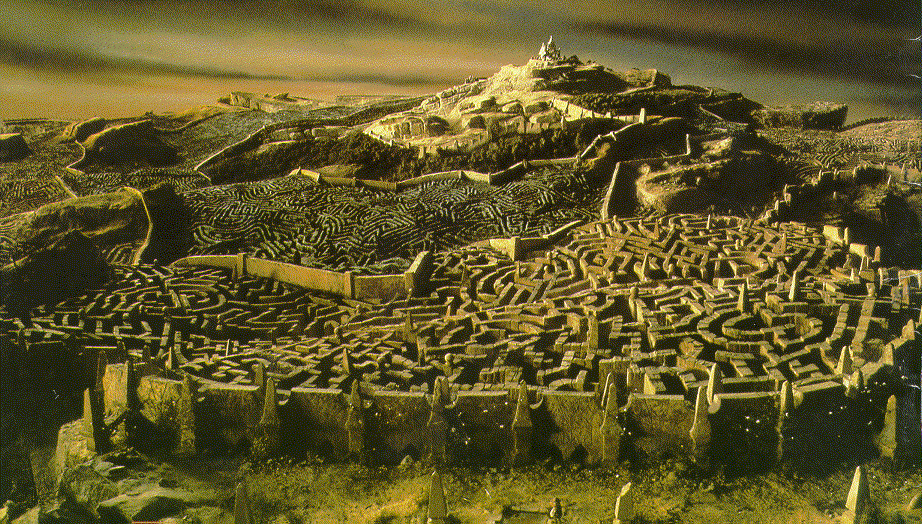

Potential right ways are masked. Things move, illusions, hidden passages.
Perhaps not so much as an actual labrynth, but an object can reveal the passages for a second or two.
Like the lense of truth from Zelda?
Majora's mask!
http://www.zeldadungeon.net/Zelda06Masks.php
Like the lense of truth from Zelda?
Majora's mask!
http://www.zeldadungeon.net/Zelda06Masks.php
Idea 2 - Mask puzzle.
Turn the idols to match a series of masks and match the expressions.


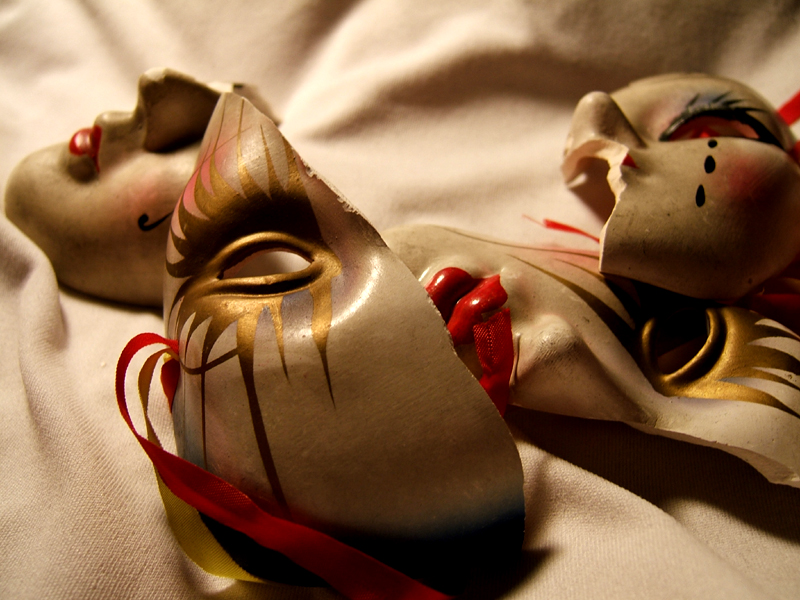
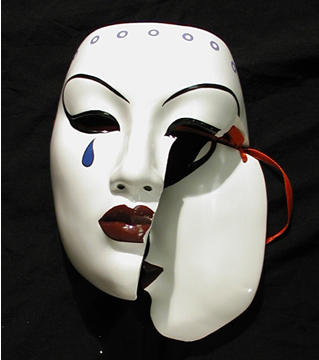
Idea 3 - Pieces of Mask
Search the area to find the pieces of the mask needed to advance.
Subscribe to:
Posts (Atom)